

Local SEO is essential for small businesses that want to stand out in their local community. By optimizing your online presence, you can appear higher in local search results on Google and other search engines, driving more foot traffic or online inquiries. In today’s digital world, where most customers search online before visiting a business, local SEO ensures your business reaches the right customers at the right time.
According to a BrightLocal study, 78% of mobile searches for local businesses result in an offline purchase, highlighting just how crucial local SEO is for attracting nearby customers. For example, a coffee shop in Chicago that optimizes for local search can appear for queries like “best coffee near me in Chicago”, increasing both visibility and walk-in traffic.
But what exactly is local SEO, and why should small business owners prioritize it? In this guide, we’ll walk you through the fundamentals of local SEO, how it works, and why it’s critical for your marketing strategy. By the end, you’ll understand how effective local SEO tactics can help your business compete with larger competitors, attract more local customers, and drive measurable growth.
Keep reading to discover actionable strategies that can help your small business dominate local search results.
What Is Local SEO and Why It Matters for Small Businesses
Local SEO helps small businesses optimize their online presence to appear in local search results. Unlike traditional SEO, which targets broad keywords, local SEO focuses on geographic relevance. For example, when someone searches for “best pizza near me in Austin”, Google displays local businesses that match the query and are nearby.
Implementing local SEO allows small businesses to increase visibility in both organic search results and Google Maps, making it easier for potential customers in the area to find them. One of the most powerful tools for this is your Google Business Profile (formerly Google My Business). Optimizing your listing including accurate business name, address, phone number (NAP), photos, and updates can significantly boost your chances of appearing in the local “map pack” and attracting valuable traffic.
Why is this crucial for small businesses? Local SEO levels the playing field, enabling smaller businesses to compete with larger competitors in their area without a massive marketing budget. By focusing on local search strategies, even businesses with limited resources can reach their target audience effectively.
- Pro Tip: Start by claiming and optimizing your Google Business Profile, ensuring your NAP information is consistent across all platforms. This is one of the fastest ways to improve your local search rankings. For comprehensive support, you can explore our local seo services to boost your online presence and drive more targeted local traffic.
Why Small Businesses Should Invest in Local SEO to Compete with Larger Competitors
Local SEO empowers small businesses to compete with larger brands by focusing on their specific geographic market. While national companies may have big marketing budgets, small businesses can still shine by optimizing for local searches and maintaining an active Google Business Profile. Partnering with a digital marketing agency for small business can help you effectively implement these strategies and ensure your business stands out in local search results, even with limited resources.
Key Benefits of Local SEO for Small Businesses
- Increased Local Visibility: Appear in local search results and Google Maps so nearby customers can find your business when searching for relevant services.
- Improved Conversion Rates: Targeting local searchers attracts customers who are ready to take action, driving more leads and sales.
- Enhanced Customer Trust: Being visible in local searches builds credibility, showing potential customers that your business is reliable and established.
Examples of Local SEO in Action:
- A restaurant in Chicago can rank for “best Italian restaurant near me.”
- A plumber in Austin can appear for “affordable plumber in Austin.”
- A law firm in Dallas can target “personal injury lawyer near me.”
Competitive Advantage
Even with a smaller marketing budget, local SEO levels the playing field by allowing small businesses to:
- Target geo-specific keywords.
- Optimize their Google Business Profile.
- Leverage local backlinks to build authority.
Tips to Start Competing
- Claim and fully optimize your Google Business Profile.
- Encourage customers to leave positive reviews.
- Focus on local long-tail keywords specific to your area.
Tip: Businesses that implement local SEO effectively can see measurable results within 3–6 months, including higher rankings, increased local traffic, and improved conversions.
Top Local SEO Strategies for Small Businesses
To improve your local search visibility, small businesses should focus on these key strategies:
1. Google Business Profile Optimization
A fully optimized Google Business Profile helps your business appear in local search results and Google Maps. Make sure your business name, address, and phone number (NAP) are accurate across all platforms. Add high-quality photos, update your hours regularly, and post updates to engage customers.
- Tip: Businesses with complete GMB profiles are 70% more likely to attract local customers (BrightLocal). To ensure you’re getting the most out of your GMB profile, consider our google business profile optimization service to improve your local search visibility and drive more customers to your business.
2. Local Keyword Research
Find keywords that reflect your services and location, such as “affordable plumber in Austin” or “best dental clinic in Chicago”. Use these keywords in your website copy, headings, and blog content.
- Tools: Google Keyword Planner, SEMrush, Ahrefs
- Tip: Focus on long-tail keywords that target “near me” searches in your city for higher conversion potential.
3. Local Backlinks
Local backlinks from trusted sources in your community can boost authority and rankings. Collaborate with local blogs, newspapers, or partner with businesses for link-building opportunities. For an effective strategy, you can also consider a local link building service to help you secure quality backlinks from reputable local sources.
- Example: Sponsor a local charity event or collaborate on a local guide to earn backlinks.
4. Mobile Optimization
With most local searches happening on smartphones, your website must be mobile-friendly. Mobile optimization improves user experience and increases your chances of ranking in mobile search results.
- Tip: Use Google’s Mobile-Friendly Test to check your website.
5. Content Marketing for Local SEO
Create content that resonates with your local audience, such as blog posts about community events, local industry news, or customer success stories.
Examples:
- “5 Best Coffee Shops in Austin”
- “How [Your Business] Supports Local Events in Chicago”
How to Optimize Your Google Business Profile and Google Maps Listing for Local SEO
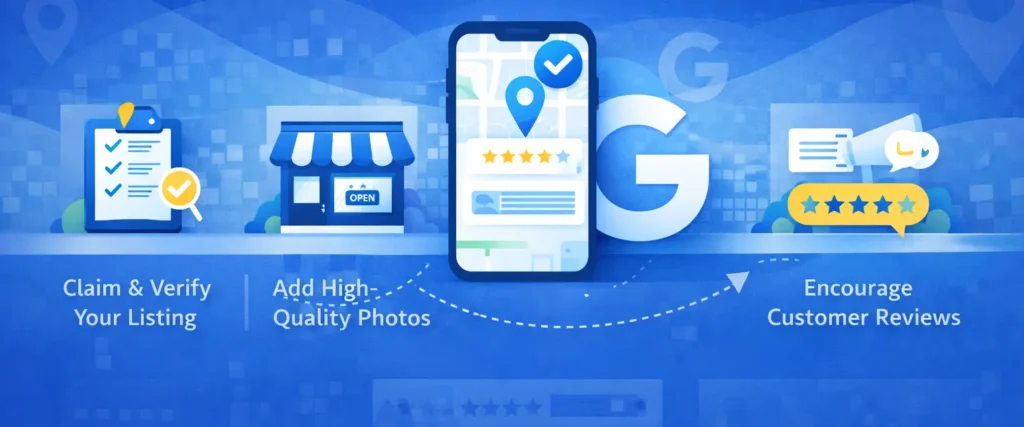
Your Google Business Profile (formerly Google My Business) and Google Maps listing are essential tools for improving local search visibility, driving traffic, and attracting new customers. Optimizing both ensures your business ranks in the local “map pack” and signals credibility to potential clients.
1. Claim, Verify, and Maintain Accurate Information
- Ensure your business name, address, phone number, and website URL (NAP) are accurate across all platforms.
- Verify your listing to appear in Google search results and Maps.
- Keep business hours up to date, including special hours for holidays or events.
Tip: Consistent NAP across your GMB and Maps listing helps Google verify your business and boosts local rankings.
2. Add High-Quality Photos
- Upload professional images of your storefront, staff, products, or services.
- Regularly update photos to showcase new offerings or promotions.
Impact: Listings with photos are 42% more likely to receive direction requests and higher engagement.
- Example: A bakery in Denver increased foot traffic by 25% after updating photos and encouraging customer reviews.
3. Encourage and Respond to Customer Reviews
- Ask satisfied customers to leave reviews on both your GMB and Google Maps listing.
- Respond professionally to all reviews, including negative ones, to show engagement and build trust.
- Maintain a steady flow of reviews to stay relevant in local search results.
Tip: Prompt review responses (ideally within 24 hours) improve local SEO authority and demonstrate commitment to customer satisfaction.
4. Regular Updates and Engagement
- Post updates, promotions, or events on your Google Business Profile.
- Continuously refresh your Maps listing with new photos and content.
To truly stand out and increase your chances of ranking at the top of local search results, it’s crucial to dive deeper into the best practices for Google Maps ranking. For more in-depth tips and strategies on how to rank higher on google maps, check out our detailed guide to further boost your local visibility and attract more customers.
How to Deal with Negative Reviews in Local SEO
Negative reviews, if handled properly, can actually strengthen your business’s reputation and positively influence local SEO. Here’s how to manage them effectively:
1. Respond Professionally
- Always reply politely and professionally.
- Acknowledge the customer’s experience and offer to resolve the issue privately.
- Example Response: “We’re sorry you had a negative experience, and we’d love to make things right. Please reach out to us at [contact information] so we can assist you further.”
2. Use Reviews as an Opportunity
- Treat negative reviews as a chance to demonstrate commitment to customer satisfaction.
- Thoughtful responses can turn dissatisfied customers into loyal clients and improve your online credibility.
3. Encourage Positive Reviews
- Ask satisfied customers to leave feedback on Google Maps or relevant directories.
- A higher volume of positive reviews can counterbalance negative feedback and improve your local search ranking.
4. Monitor and Respond Quickly
- Responding within 24 hours shows both customers and Google that you are engaged and trustworthy.
- Set up alerts or tracking tools to stay on top of new reviews.
Tip: Consistently managing reviews improves your local SEO authority, increases click-through rates from search results, and strengthens your business reputation.
Local SEO for Service-Based Businesses
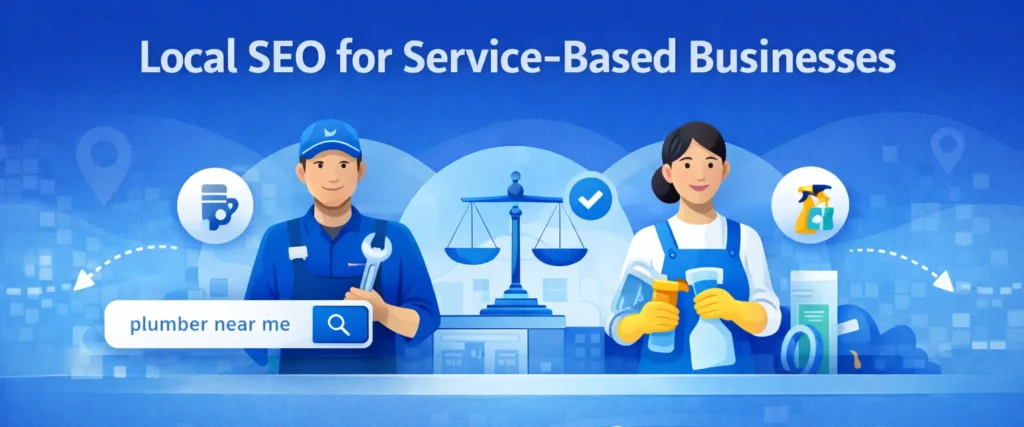
Service-based businesses such as contractors, lawyers, or cleaning services face unique challenges in local SEO because they often don’t have a physical storefront. However, by focusing on the right local SEO strategies, these businesses can still rank highly in search results and attract local customers.
1. Google Business Profile Optimization
Claim and fully optimize your Google Business Profile (GMB):
- Ensure your business name, address, phone number, and website URL (NAP) are accurate.
- Regularly update your profile with posts, photos, promotions, and business hours.
- Engage with customers by responding promptly to reviews.
Pro Tip: Encourage satisfied clients to leave reviews; these directly impact local rankings.
- Example: A cleaning service in Boston increased inquiries by 30% after optimizing their GMB listing and posting weekly updates.
2. Local Keyword Targeting
Focus on location-specific keywords to appear in local searches:
- Examples: “plumber in Austin”, “best personal injury lawyer in Dallas”.
- Use keywords naturally in website copy, service pages, and blog content.
Tip: Incorporate long-tail and “near me” keywords to improve visibility for high-intent local searches.
3. Local Backlinks
Build backlinks from trusted local sources to improve authority:
- Collaborate with local directories, community blogs, or business partners.
- Sponsor local events or charities to earn relevant backlinks.
Tip: A diverse backlink profile strengthens authority and rankings across your local area.
4. Local Content Strategies
Create content that resonates with your local audience:
- Blog posts about local events or community news.
- Customer stories highlighting your involvement in the community.
- Guides or tips relevant to your city or region.
Tip: The more relevant and location-specific your content, the more likely it is to attract local traffic.
5. Additional Tips for Service-Based Businesses
- Keep your NAP consistent across all platforms.
- Consider implementing service-area schema markup to help Google understand the locations you serve.
- Update your profile and content regularly to maintain local relevance.
Pro Tip: Even without a storefront, service-based businesses can rank in local search by optimizing GMB, targeting local keywords, building backlinks, and producing localized content.
How Social Media Boosts Local SEO for Small Businesses
Social media can significantly impact your local search rankings by increasing online visibility and driving engagement. Platforms like Facebook, Instagram, and Twitter allow you to connect with your community, share local content, and signal relevance to search engines.
1. Geo-Tagging Posts
Add location tags to your social media posts to link them to your business’s physical location. This helps your business rank for location-based searches and reinforces your local presence.
- Example: A coffee shop in Seattle can geo-tag posts about events or promotions to appear in local searches like “coffee near me.”
2. Share Local Content
Highlight your involvement in the local community or promote local events. This builds a strong connection with your area and increases your local SEO authority.
- Example: Share blog posts about local charity events, partnerships, or community highlights.
3. Encourage Engagement and Shares
The more your content is liked, shared, and commented on, the higher the potential impact on your local SEO. Social engagement signals can indirectly influence your visibility in search results.
- Tip: Businesses that consistently engage on social media can see up to a 20% increase in local search visibility.
How to Optimize Your Website for Local Search
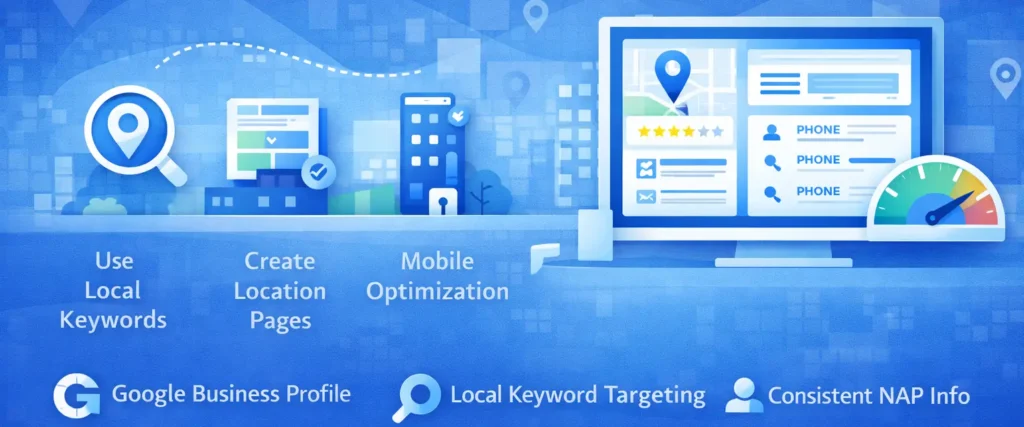
Optimizing your website for local SEO ensures your business appears in local search results when potential customers are looking for your services.
1. Use Local Keywords
- Incorporate geo-specific keywords in page titles, meta descriptions, headers, and content.
- Example: “Best plumber in [City]” or “Affordable dentist in [Town]”.
- Tools: Ubersuggest, SEMrush, Ahrefs for keyword discovery.
2. Create Location-Specific Landing Pages
- If you serve multiple locations, create dedicated landing pages for each.
- Include local keywords, maps, testimonials, and unique content per location.
3. Ensure Your Website is Mobile-Friendly
- A seamless mobile experience is essential for local searches.
- Test with Google’s Mobile-Friendly Test and optimize layouts for smartphones and tablets.
4. Include Consistent NAP Information
- Display your Name, Address, and Phone number on every page, ideally in the footer.
- Consistent NAP helps search engines verify your business details across platforms.
5. Optimize Site Speed
- Fast-loading websites reduce bounce rates and improve local rankings.
- Use Google PageSpeed Insights or GTmetrix to analyze and optimize your website speed.
6. Use Structured Data (Optional but Recommended)
- Add LocalBusiness schema markup to help search engines understand your business and location.
- Structured data can enhance SERP listings with rich snippets.
Tip: Keep all business information accurate, update pages regularly, and integrate reviews or testimonials to boost trust and local rankings.
How to Track, Measure, and Scale Local SEO for Small Businesses
Monitoring and optimizing your local SEO performance is crucial to ensure your efforts drive measurable results and support business growth. Local SEO is not a “set it and forget it” process, tracking metrics and adapting your strategy over time ensures sustained visibility and increased local leads.
Key Metrics to Track
- Organic Traffic from Local Searches: Monitor visitors from your target locations.
- Local Keyword Rankings: Track rankings for city-specific or “near me” searches.
- Conversions from Local Visitors: Measure form submissions, calls, bookings, or other local leads.
- GMB Engagement Metrics: Track profile views, directions requests, phone clicks, and review activity.
To gain a clear understanding of your current performance, start with a local seo audit service. A comprehensive audit helps identify where your efforts stand and what areas need improvement to drive better results.
Timeline for Results
- Short-term (0–3 months): Early improvements in keyword rankings, GMB optimization, and content engagement.
- Mid-term (3–6 months): Steady increases in local traffic, leads, and Google Maps visibility.
- Long-term (6–12 months): Consistent growth in conversions, review volume, and top-of-page local rankings.
Strategies to Scale Local SEO with Business Growth
- Update Google My Business Regularly: Add new locations, update hours, upload photos, and post promotions to keep listings fresh.
- Target New Local Keywords: Research emerging search trends and location-specific phrases. Tools like SEMrush or Ahrefs can help identify high-opportunity keywords.
- Expand Content Marketing: Create blog posts, landing pages, and case studies tailored to new service areas. Localized content improves regional search visibility.
- Build Local Backlinks: Partner with local organizations, sponsor events, and leverage press opportunities to strengthen authority and rankings across locations.
- Monitor Metrics and Adjust: Track organic traffic, local rankings, and leads by region. Refine your strategy based on performance data to ensure continued growth.
Tip: Check Google Analytics and GMB Insights at least monthly. Look for trends, not isolated data points, and continuously optimize listings, content, and backlinks as your business expands into new markets.
Local SEO Mistakes Small Businesses Should Avoid
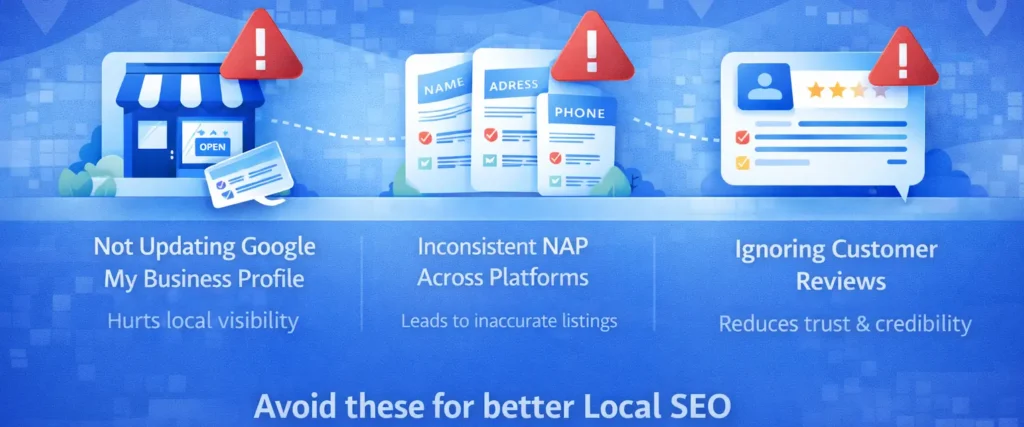
To improve your local search performance, it’s essential to avoid common local SEO mistakes that can hurt your rankings and online visibility.
1. Not Updating Your Google My Business Profile
Your GMB profile is the backbone of local SEO. Failing to update it regularly can reduce visibility.
How to Fix:
- Add new photos and posts.
- Keep business hours accurate.
- Engage with customers via updates.
Example: A restaurant that updated its GMB weekly saw a 30% increase in local clicks within two months.
2. Inconsistent NAP Across Platforms
NAP (Name, Address, Phone number) must be identical across your website, social media, directories, and review sites.
- Impact: Inconsistencies confuse search engines and hurt rankings.
How to Fix:
- Audit all listings for accuracy.
- Use a tool like Moz Local or Whitespark to maintain consistency.
3. Ignoring Customer Reviews
Customer reviews influence local SEO and build trust. Ignoring them can reduce visibility and credibility.
How to Fix:
- Encourage satisfied customers to leave reviews.
- Respond professionally to all reviews, including negative ones.
- Monitor reviews consistently.
Example: Responding to reviews within 24 hours can improve local search ranking and click-through rate.
- Tip: Fixing these common mistakes can lead to immediate improvements in local rankings and online visibility.
The Cost of Local SEO for Small Businesses
The cost of local SEO services varies based on project scope, competition, and whether you handle it in-house or hire an agency. On average, small businesses can expect to spend $500–$2,000 per month for comprehensive local SEO services.
If you’re on a budget, you can still implement effective local SEO strategies in-house:
1. Optimize Your Google Business Profile
- Claim and update your profile regularly.
- Add photos, posts, and accurate NAP information.
- Cost: Free, but high impact for local search visibility.
2. Conduct Local Keyword Research
- Use free tools like Google Keyword Planner or Ubersuggest.
- Identify geo-specific keywords for your business pages and blog content.
3. Use Free Tracking Tools
- Google Analytics and Google Search Console provide valuable performance insights.
- Monitor traffic, rankings, and conversions to make data-driven decisions.
Scaling Up
As your business grows, investing in professional local SEO services can help you:
- Increase visibility in competitive markets.
- Optimize content and backlinks for higher rankings.
- Track ROI and performance with advanced analytics.
Tip: Start with Google Business Profile optimization and local keyword research to maximize results without breaking the bank.
How Local SEO Integrates with Your Overall Digital Marketing Strategy
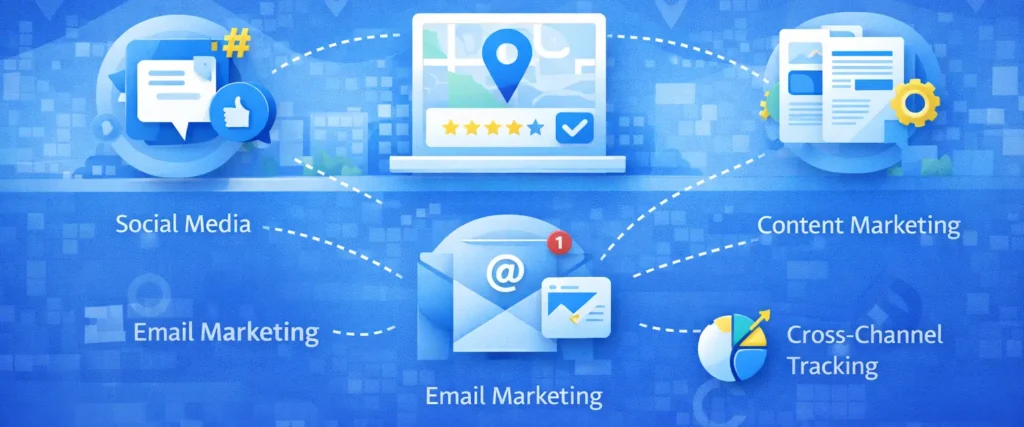
Local SEO should not operate in isolation; it works best when integrated into your broader digital marketing strategy. Combining local SEO with other channels increases visibility, drives engagement, and maximizes ROI.
Key Integration Strategies:
Social Media:
- Geo-tag posts, share local content, and highlight events or promotions.
- This reinforces your presence in local search and strengthens your brand in the community.
Email Marketing:
- Promote location-specific offers or events to local subscribers.
- Include links to your website and local landing pages to drive traffic and conversions.
Content Marketing:
- Produce blog posts, case studies, or guides tailored to your local audience.
- Optimize content with local keywords and internal links to relevant service pages.
Cross-Channel Tracking:
- Use analytics to measure the combined impact of local SEO and other channels on traffic, leads, and conversions.
- Track campaigns holistically to identify which channels drive the most local engagement.
Tip: Align your local SEO efforts with social media, email campaigns, and content marketing. Consistent messaging and optimized local content across channels will maximize visibility, attract local customers, and strengthen your overall marketing performance.
How to Choose the Right Local SEO Service for Your Small Business
Selecting the right local SEO service can make or break your efforts to improve local search visibility. Here are the key factors to consider:
1. Experience with Local SEO
- Choose a provider with a proven track record working with small businesses in your industry.
- Ask for case studies or client testimonials to verify results.
- Make sure they understand local search challenges, such as Google My Business optimization, local backlinks, and geo-targeted content.
2. Transparent Reporting and Measurable Results
- Look for services that provide regular, clear reports on SEO performance.
- Metrics should include keyword rankings, organic traffic, conversion rates, and GMB insights.
- Transparency ensures your ROI is trackable and the provider is accountable.
3. Affordable and Flexible Pricing
- Local SEO services can range from a few hundred to several thousand dollars per month.
- Ensure pricing fits your budget and packages are customized for your business goals.
- Avoid providers promising instant results or guaranteed rankings, as these are usually red flags.
Tip – Questions to Ask Potential Providers
- “How long have you worked with small businesses in my industry?”
- “Can you share examples of successful local SEO campaigns?”
- “What metrics will you use to measure success, and how often will you provide reports?”
- “What specific services will you perform, and how do they align with my goals?”
Choosing the right provider ensures your business can improve online visibility, attract more local customers, and grow sustainably.
Click Path Marketing specializes in helping small businesses implement local SEO strategies and drive measurable results. Contact us to learn more.
Conclusion
Local SEO for small businesses is essential for driving targeted traffic, increasing online visibility, and generating more local leads. By implementing strategies such as Google My Business optimization, local keyword targeting, and location-focused content, small businesses can compete with larger competitors and grow their local customer base.Ready to see your business appear at the top of local search results? Contact Click Path Marketing today for a free consultation and discover how your business can attract more local customers in [Your City/Region].